
Melanin Minds
Melanin Minds in STEM Camp is a summer camp, part of the BEST STEM initiative, funded by the Government of Canada’s Canadian Heritage Program. Participants engage in hands-on activities exploring AI, 3D modelling, and programming.
Target Audience: Youth Ages 12 – 16
Community Partners: University of Calgary
Program Lead: Sinit Abraha (edi@brainstemalliance.com)
Case Study
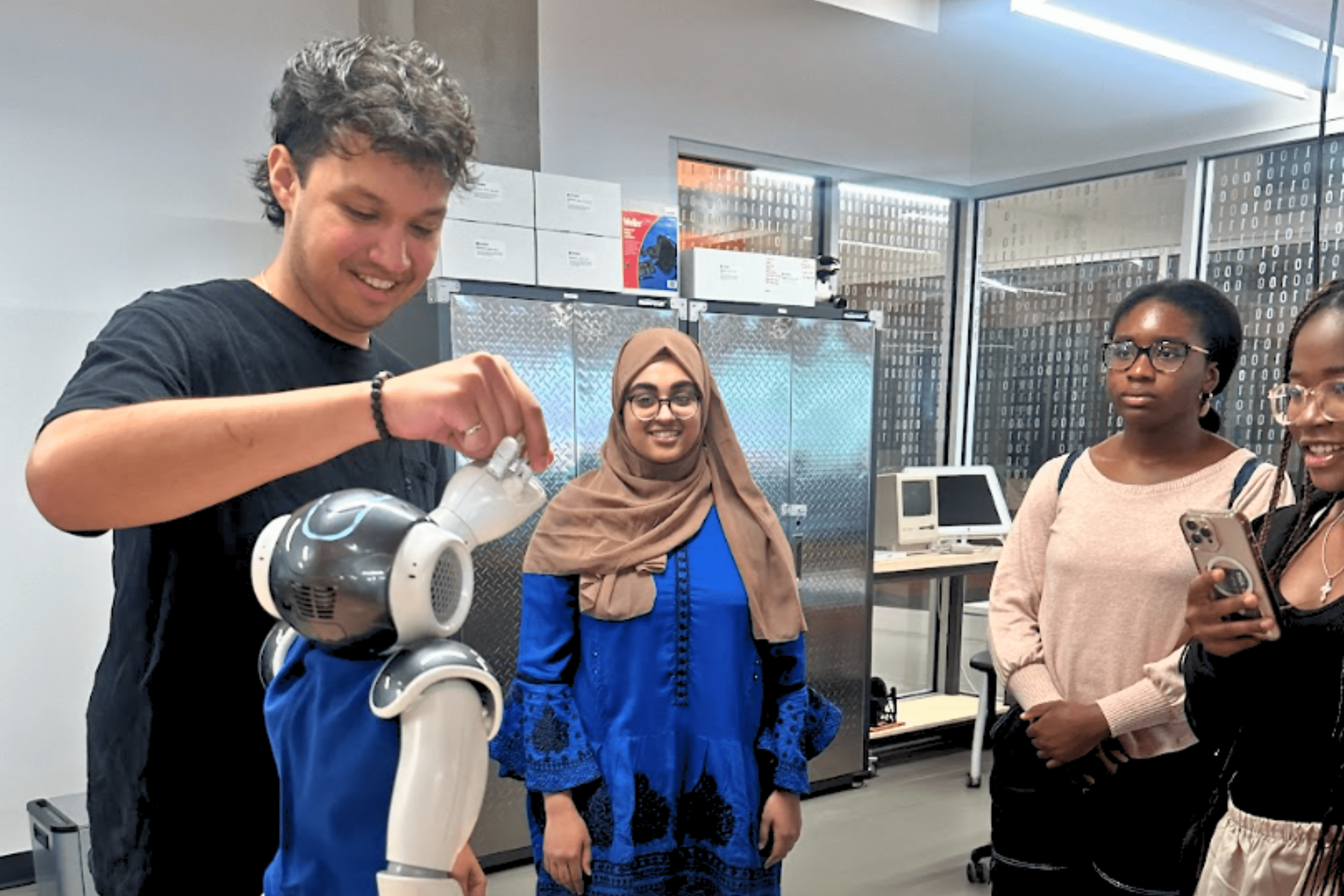
In the summer of 2024, we hosted an inspiring two-week camp for youth aged 13 to 18 called Melanin Minds. Held at Dr. Jennifer Adams’ lab at the University of Calgary, this camp was a powerful step toward fostering diversity, equity, and inclusion (DEI) in STEM fields. In collaboration with Minds in Motion and Markerspace, we curated a series of transformative activities that fostered creativity, critical thinking, and technical skills. The camp empowered young minds by engaging in activities such as robotics, soldering electronics, 3-D printing, and cybersecurity, where they also explored the world of artificial intelligence and completed an innovative DEI obstacle course designed to raise awareness and challenge biases in STEM.
The main goal was to provide strategies to improve healthcare for people from equity-deserving groups. Students explored their STEM interests and built confidence while the staff promoted engineering education. This program left participants with a renewed sense of confidence, curiosity, and belonging in the STEM community. For many, this was their first time engaging with advanced technologies like robotics, 3D printing, and artificial intelligence, which unlocked new passions and career aspirations. By offering hands-on experiences and real-world applications of STEM principles, the camp helped demystify complex topics and fostered a belief that STEM is accessible to everyone, regardless of background.
Year in Review
Week 1
Everyone got to know each other through Icebreaker activities and worked with peers through collaborative assignments and activities involving robotics and AI, healthcare systems and EDI integration, disease spread simulation, and circuit design and programming. Everyone expressed a variety of skills and built on their curiosity through science.
Week 2
The focus was more on advanced topics and project development through modeling and printing, making polymers. Additionally, they did more group-based work and reflected on their understanding of the science being learned and the real world. The camp concluded with a competition where three groups presented and defended their innovative solutions to the problem question.